
Launching a product in the US market is one of the most ambitious decisions a brand can make. According to the Center for Exhibition Industry Research (CEIR), approximately 13,000 trade shows are held annually in the United States. and choosing the right one is not just a matter of budget: it is a strategic decision that defines how your product will be perceived by buyers, distributors, and specialized media.
At Diper Exhibitions we have been designing, building, and managing stands for trade shows in the United States, Latin America, and Europe for over 38 years. We have supported more than 600 brands in their internationalization processes, and we know that the success of a launch does not start on setup day, but much earlier: the moment you choose the right trade show.
This guide will help you make an informed decision, based on clear criteria and with your feet on the ground. Because it is not about being at any trade show, but at the right one.
Why choosing the right trade show matters more than the stand itself
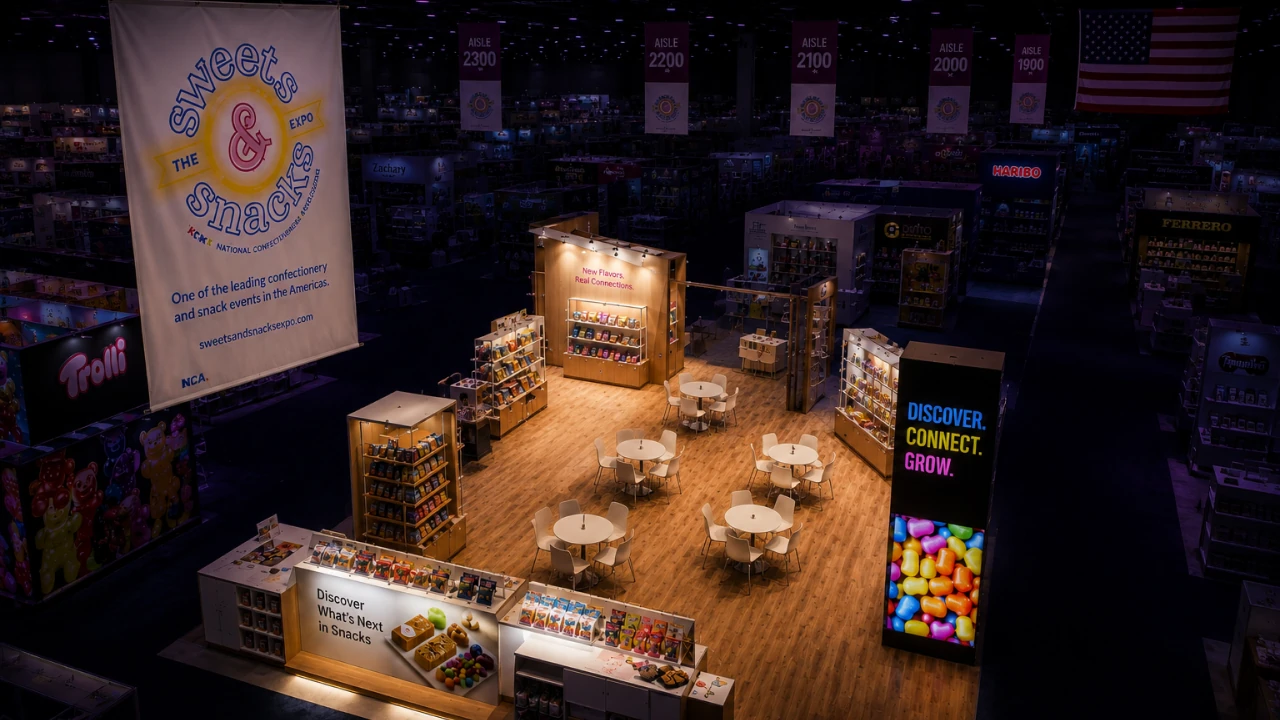
Many brands make the mistake of focusing all their energy on the stand design and neglecting the previous phase: selecting the event. A spectacular stand at the wrong trade show is like a brilliant ad on a channel no one watches.
A bad choice can mean thousands of dollars wasted, low-quality contacts, and an exhausted sales team. On the other hand, a well-chosen trade show places you in front of buyers who already have context, intent, and budget. That is the difference between “participating” and “competing.”
At Diper Exhibitions we always start each project with a strategic briefing phase where we help our clients align their business objectives with the most suitable trade show. If you want to see how we have done it with other brands, you can explore our success stories, where we share real accounts of launches and participations in international trade shows.

The 6 key criteria for choosing a trade show in the United States

1. Define your main objective before looking at calendars
Before searching for trade shows, ask yourself what you want to achieve. It is not the same to look for qualified leads as it is to generate brand awareness or sign agreements with distributors.
Some typical objectives of a product launch are obtaining a specific number of pre-orders, scheduling meetings with key retailers, capturing the attention of specialized media, or identifying strategic distribution partners. If you do not define what success means to you, it will be impossible to measure it later.
2. Study the visitor profile, not just the number of attendees
A trade show with 50,000 attendees may seem more attractive than one with 5,000, but what really matters is who walks through the aisles. Are there buyers with decision-making power? Does the visitor profile match your ideal customer? The quality of the audience always outweighs the quantity.
Ask the organizer for statistics from previous editions: sectors represented, attendees’ job titles, percentage of purchase decision-makers, and exhibitor retention rate. A renewal rate above 30% usually indicates that exhibitors find real value in the event.
3. Look at your competitors and the brands you admire
If your direct competitors return year after year to a trade show, it is a sign that the event works for your sector. But also pay attention to aspirational brands or those from complementary sectors: their presence gives you clues about the event’s positioning.
In our project portfolio you can see how other brands have approached their presence at US trade shows, with custom-designed stands for different types of events and sectors.
4. Calculate the total cost, not just the floor price
Renting the space is just the tip of the iceberg. The real cost of a trade show includes the design and construction of the stand, transportation of materials, travel and accommodation expenses for the team, local labor for assembly, venue services (electricity, cleaning, internet), and promotional marketing prior to the event.
Request complete budgets before committing. A seemingly cheap trade show can become very expensive once you add up all the associated costs.

5. Evaluate the location and dates of the trade shows
The United States is a huge country with a very diverse trade show geography. Las Vegas, Chicago, Orlando, San Francisco, and New York concentrate the largest events, but each city has its own logistical and cost particularities.
Check that the dates do not coincide with other important events in your sector, that the city is accessible to your potential customers, and that the calendar aligns with your sales cycle.
6. Review visibility opportunities beyond the stand
The best trade shows offer much more than square meters: conferences, panels, sponsorship opportunities, matchmaking apps between attendees and exhibitors, and networking spaces.
Participating as a speaker or sponsoring a coffee break can multiply your visibility without needing to double the size of your stand. At Diper Exhibitions we help you integrate your stand strategy with these opportunities to maximize your presence. If you want to stay up to date with trends and recommendations, visit our blog, where we publish practical content about the trade show world.
Common mistakes when choosing a trade show for a launch

These are the mistakes we see most often in brands debuting in the US market:
- Getting carried away by the size of the trade show without verifying the audience.
- Betting the entire budget on the space and neglecting the stand design.
- Not calculating logistical costs until it is too late.
- Choosing a trade show without having visited it before as an attendee.
- Not having a lead follow-up plan for after the event. Generating contacts at a trade show does not help much if there is no strategy to give continuity to the conversations. Quick and organized follow-up is key to converting initial interest into meetings, sales, or real commercial agreements.
Avoiding them is easier when you have a team that knows the terrain. Diper Exhibitions has direct operational presence in the United States and more than 12,000 projects installed globally, which allows us to anticipate problems before they arise.

Frequently asked questions
How much does it cost to exhibit at a trade show in the United States?
It depends on the event, the size of the space, and the type of stand. As a reference, a turnkey 10×10 feet (9 m²) stand can range from about 8,000 USD to more than 30,000 USD if it includes custom design, interactive technology, and high-end furniture. To this, you must add the floor cost, which varies depending on the trade show.
Which type of trade show is better for me: a generalist one or a niche one?
If your product is very specialized, a niche trade show usually yields better results because it attracts a more qualified audience. If your product has broad appeal and you need volume of contacts, a generalist trade show can work. The key lies in the visitor profile, not the label of the trade show.
How far in advance should I start planning my product launch?
For a trade show in the United States, it is advisable to start at least six months in advance. The best spaces are reserved well in advance, and the design and construction of a custom stand require time. At Diper Exhibitions we work with methodologies that cover the before, during, and after of each trade show, so that you only have to worry about your business.