The success of a trade show participation doesn’t depend solely on the number of visitors who come to your booth, but on your ability to turn those interactions into business opportunities. An effective lead capture strategy allows you to identify qualified prospects, organize information efficiently, and enable timely follow-up after the event.
With the right layout, a clear message, the right tools, space planning, team training, and a well-defined sales process, your booth can become a powerful lead generation channel.
Start with a clear lead capture goal
Before you arrive at the event, define what a qualified lead means for your company. Not every visitor who scans a code, leaves a business card, or picks up a brochure represents a real opportunity.
Your goal might be to schedule demos, receive sales inquiries, contact distributors, identify decision-makers, build a database, or qualify prospects for later follow-up. Each goal requires a different process.
For example, if your goal is to schedule sales meetings, the booth should make it easy for visitors to book a time slot. If your goal is to educate about a product, your team should capture information about interest, industry, company size, and purchase timeline.
Define what information you need to capture
A good lead form should be short enough to complete quickly, but useful enough to support follow-up. Some important data points include: name, company, email, phone, job title, industry, product interest, budget, timeline, and next steps.
Avoid asking for information your team won’t use. The goal isn’t to have the longest form, but to capture the right information at the right time.
Design the booth to generate conversations
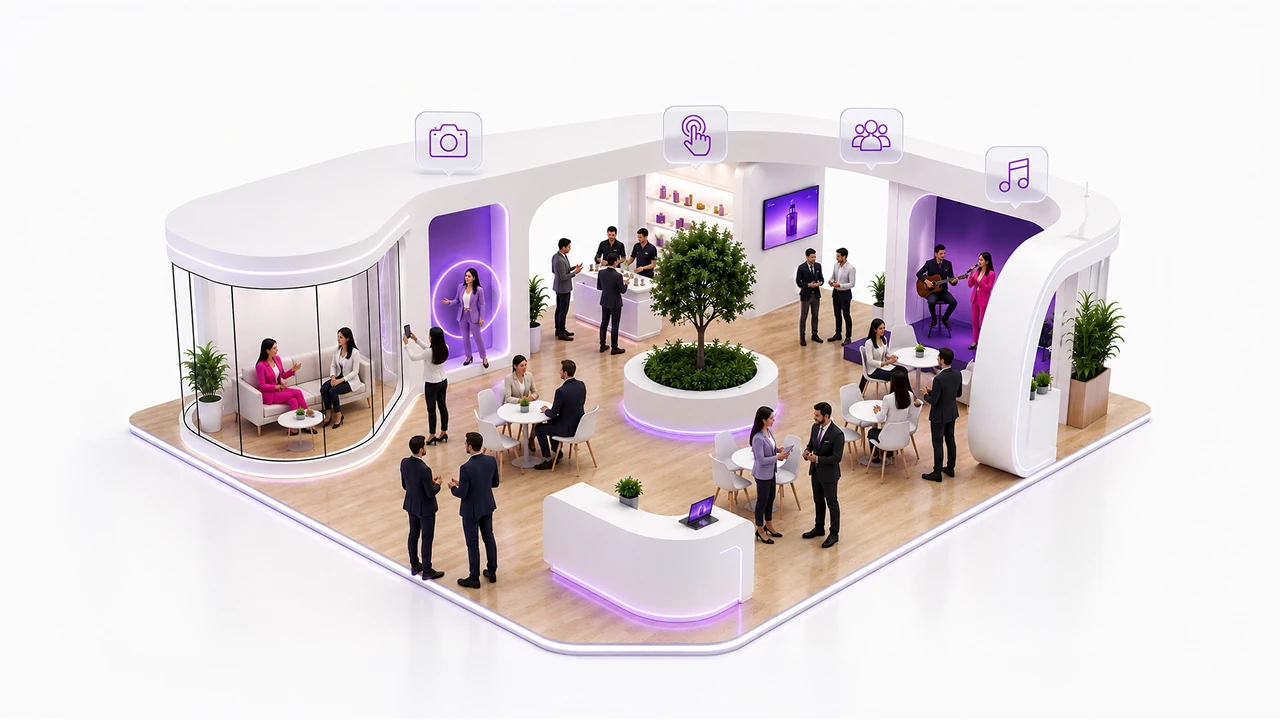
Lead capture starts before the visitor even speaks with your team. It begins with the layout, graphics, message, and flow of the booth. If the space feels closed, cluttered, or confusing, many attendees will walk right past.
Great trade show booth design should make it easy for people to understand your value proposition and approach your team. Open spaces, clear signage, good lighting, and simple messages can all improve interaction.
The experiences we offer at Diper Exhibitions are designed to attract the right audience and spark natural conversations. For example:
- Instagrammable spaces that invite visitors to come closer, take photos, and share them on social media, amplifying your reach and generating brand mentions.
- Interactive activations and product demonstrations that let visitors experience your offering firsthand, creating a memorable moment that makes information exchange feel natural.
- Gastronomic experiences, live music, and on-stage presentations that turn your booth into a gathering point within the event, attracting qualified traffic and creating conversation opportunities.
- Performance coordination and shows that capture attention and keep visitors engaged while they wait to speak with your team.
Your booth should guide visitors toward a natural action: ask a question, watch a demo, scan a QR code, participate in an activity, request a quote, or speak with a specialist.
Make your call to action visible
Every lead capture strategy needs a clear call to action. Visitors should know exactly what to do after they approach.
Some examples:
- “Schedule a demo.”
- “Scan to receive the guide.”
- “Talk to an expert.”
- “Request a personalized quote.”
- “Get a consultation after the event.”
The call to action should appear on booth graphics, screens, printed materials, and landing pages. If your team always has to explain the next step, the booth isn’t doing enough of the work on its own.
Use digital tools to capture leads faster
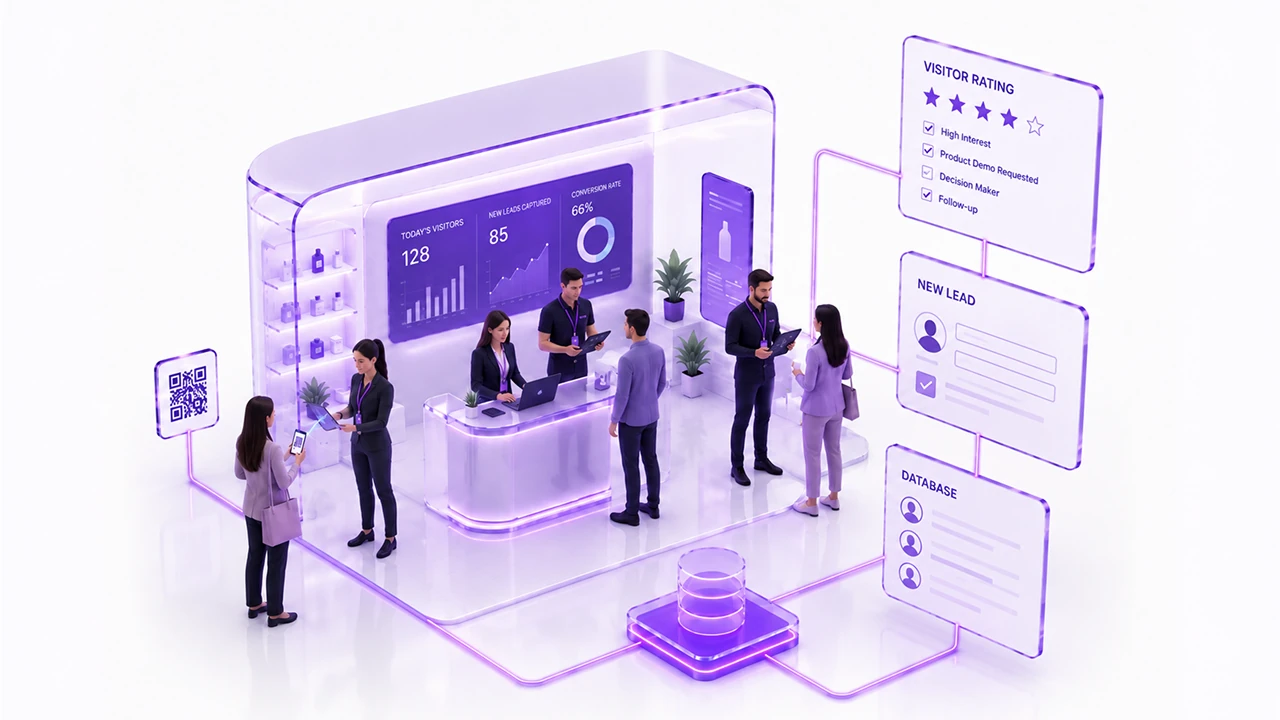
Digital tools help collect information more quickly and reduce manual errors. Badge scanners, QR codes, tablets, CRM-connected forms, mobile apps, and landing pages can make the process more seamless.
The best tool depends on the event, audience, sales cycle, and your internal systems. For some brands, a QR code that leads to a mobile form is enough. For others, a badge scanner that integrates data directly into the CRM can streamline the entire process and allow captured information to reach the sales team in real time.
Audiovisual and promotional content also plays a key role in lead capture:
- Video production, motion graphics, and animations for screens and LEDs that communicate your message more effectively.
- Pre-event content (teasers) that builds anticipation and attracts your target audience.
- Live content during the event that keeps visitors engaged while they wait.
- Content adaptation for different formats to maximize reach on social media and other channels.
The most important thing is that the tool is easy for both visitors and staff to use. If the process takes too long, people may abandon it.
Connect lead capture to your CRM
When possible, connect the capture process to your CRM or marketing automation system. This prevents lost contacts, duplicate records, and delays in follow-up.
A CRM-connected process also allows you to segment leads by interest level, product, event source, and commercial priority. This makes subsequent communication more personalized and effective.
At Diper Exhibitions, we design booths that integrate digital lead capture solutions, helping brands connect the event experience with their internal sales processes.
Train your booth team before the event
Even the best booth design won’t generate good leads if the team isn’t prepared. Staff should know how to start conversations, qualify visitors, explain the offering, use the capture tool, and assign next steps.
At Diper Exhibitions, we integrate specialized talent to enhance your booth experience:
- Promoters and brand ambassadors who attract visitors and generate interest.
- Receptionists and hosts who welcome and guide visitors.
- Translators and guides for international audiences.
- Chefs and baristas for gastronomic experiences.
- Security and cleaning staff to maintain a professional, orderly environment.
Before the event, create a simple qualification guide. The team shouldn’t sound robotic, but they should know the key questions.
Some useful questions include:
- What brings you to the show today?
- What challenge are you trying to solve?
- Are you currently comparing solutions?
- When are you planning to make a decision?
- Would you like us to contact you after the event?
Qualify leads while the conversation is fresh
Don’t wait until after the show to decide which leads are most important. The team should qualify them during the conversation or immediately after the visitor walks away.
You can use simple categories like: hot lead, warm lead, future opportunity, partner, press contact, or general visitor. This enables faster, more relevant follow-up.
A brief note can also make a big difference. Details like “interested in modular options” or “needs a quote before next month” help the sales team personalize their next message.
Offer value in exchange for contact information
Visitors are more likely to share their data when they receive something useful in return. This doesn’t always mean a promotional giveaway. In many cases, a valuable resource works better than a generic item.
You can offer a design consultation, planning guide, checklist, case study, cost estimate, industry report, demo, or post-event meeting. The offer should connect to the visitor’s real interest.
VIP hospitality is also a great magnet for attracting qualified visitors. Inviting potential clients to an exclusive experience within the booth—such as a tasting, a private show, or a meeting with company leaders—creates a memorable moment and a natural context for exchanging contact information and scheduling a follow-up meeting.
For example, a company planning to participate in multiple trade shows might value a planning guide. A brand preparing a major launch might prefer a consultation on custom trade show booths.
Use incentives that attract the right audience
Avoid incentives that attract people who aren’t potential customers. A generic prize can generate many registrations, but many of those contacts won’t be qualified.
A better strategy is to offer something relevant to your business. This helps capture fewer contacts, but of higher quality.
Prepare follow-up before the show begins
Lead capture only has value if your team follows up quickly. Many companies lose opportunities because they wait too long after the event.
Before the show, prepare email templates, sales sequences, CRM tags, meeting links, and follow-up owners. Define who will contact hot leads, who will nurture warm leads, and what message each group will receive.
Quick, personalized follow-up helps your brand stay top of mind while the conversation is still fresh.
Personalize post-event communication
Generic emails are easy to ignore. A more effective message should mention the event, the visitor’s interest, and the next step discussed at the booth.
Instead of just writing “thank you for visiting us,” mention the specific solution, product, or challenge the person discussed with your team. For example, if a visitor showed interest in modular booths, include relevant information on that topic. This shows attention and increases the likelihood of continuing the conversation.
Measure the success of your lead capture strategy
After the event, review the performance of your process. Don’t just look at the total number of contacts. A big list doesn’t always mean a successful show.
Measure:
- Qualified leads
- Scheduled meetings
- Requested proposals
- Business opportunities
- Follow-up responses
- Conversions and sales influenced by the event
- Social media growth (new followers, interactions)
- Brand mentions during the event
- Conversations generated on digital platforms
Also review booth performance. Did the layout facilitate conversations? Was the call to action clear? Did the form capture useful information? Did the team follow the process consistently?
Audiovisual content production during and after the event is also key to measuring impact:
- Professional photography that documents your participation.
- Highlight reel / aftermovie that captures the best moments.
- Reels and clips for social media that maintain post-event engagement.
- Live content that generates real-time interaction.
Companies using trade show booth rentals can also use this data to improve future designs and interaction strategies.
Improve the process for your next event
Every show provides new insights. Use what you learn to optimize booth design, team training, the capture form, the qualification process, and the follow-up strategy.
The goal isn’t just to capture more leads. The goal is to capture the best leads and convert them more effectively.
Frequently asked questions about lead capture at trade shows
What is lead capture at a trade show booth?
Lead capture at a trade show booth is the process of collecting visitor information, qualifying their interest, and organizing prospects for follow-up. It can be done using scanners, QR codes, forms, CRM, tablets, or direct conversations.
What’s the best way to capture leads at a trade show?
The best way is to combine a clear call to action, trained staff, simple digital tools, good qualification questions, and quick follow-up. The goal isn’t just to collect names, but useful information for sales.
How do you qualify trade show leads?
Leads can be qualified by asking about the visitor’s job title, company, need, budget, timeline, and level of interest. They can then be classified as hot, warm, future opportunity, or general contact.
When should you follow up with trade show leads?
Follow-up should begin as soon as possible after the event. Hot leads should receive personalized communication quickly, while warm leads can enter a nurturing sequence.
